

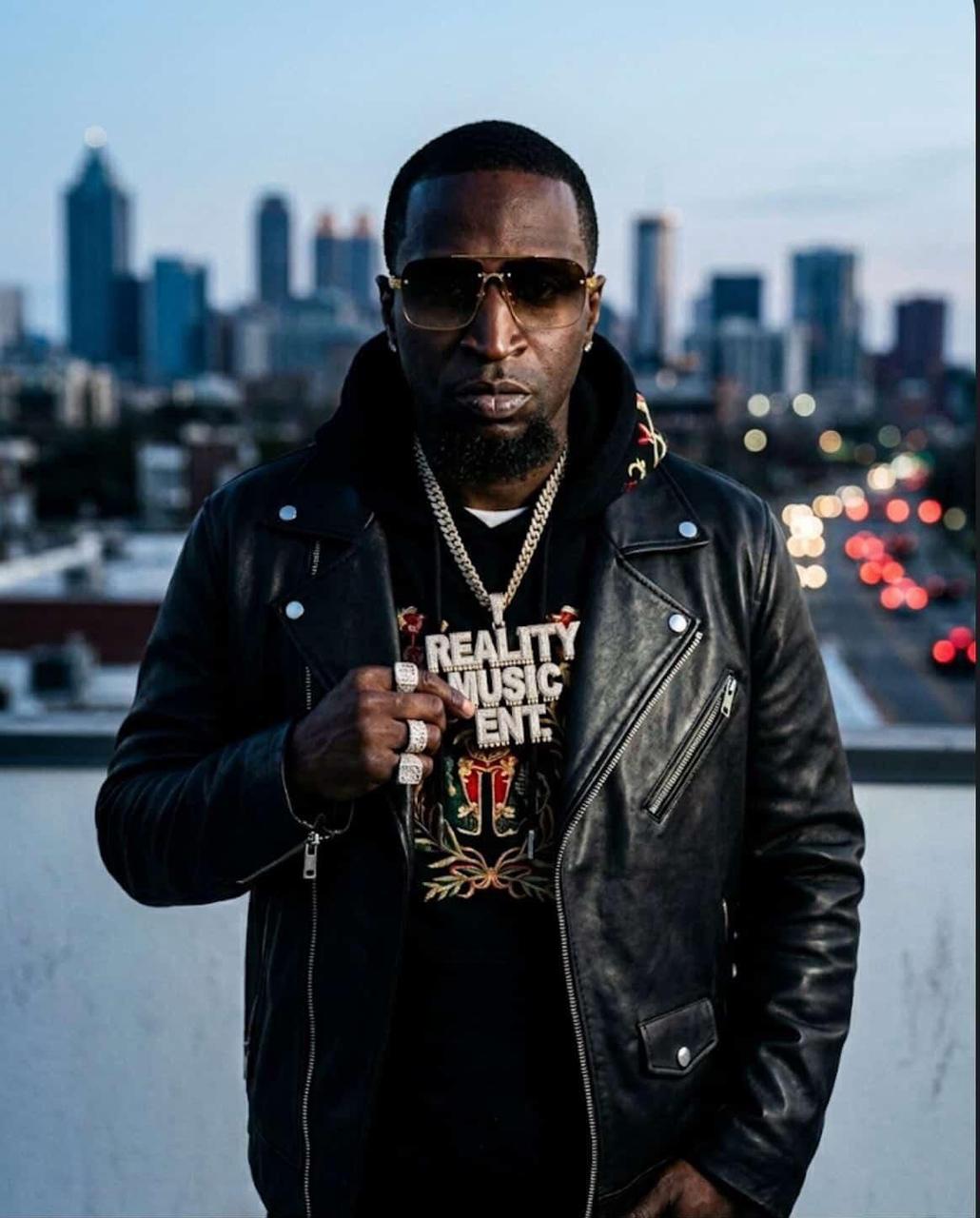
It starts the way these stories usually do. A self-made artist, a founder, a narrative of independence. Foolish positions himself as the architect of Reality Music Entertainment, a platform that supposedly blends music, media, mentorship, and branding into a single ecosystem. The language is familiar—ownership, legacy, control, expansion. It is the exact vocabulary currently dominating independent creator culture, where perception often moves faster than proof.
At first glance, the story appears coherent. Articles describe a growing brand, a catalog of mixtapes, a podcast streaming multiple times a week, and even expansion into merchandise and new platforms. Foolish is presented not just as an artist, but as a builder—someone constructing an “empire” outside the traditional system. The framing is deliberate and consistent, repeated across multiple outlets with minimal variation.
That consistency, however, is where the first cracks appear.
The coverage does not behave like independent media. Instead, it moves in clusters. Nearly identical narratives appear across different websites, each reinforcing the same claims using the same structure, tone, and talking points. This is not how organic credibility builds. Independent coverage typically diverges, questions, or adds new angles. Here, the repetition suggests something else: controlled distribution of a pre-built narrative.
The second layer of scrutiny comes from the claims themselves. One of the more prominent features states that Foolish’s project is “trending” on LiveMixtapes. But when such claims are checked against visible engagement, the scale appears materially smaller than implied. There is no strong evidence of breakout traction, chart performance, or significant audience expansion that would justify the language being used.
The same pattern extends to the broader “ecosystem” narrative. Reality Music Entertainment is described as a multi-dimensional platform, yet there is little publicly verifiable infrastructure supporting that positioning. No clear artist roster depth, no visible distribution partnerships, no measurable industry integration. What exists is a personal brand operating under a company name, not a fully scaled entertainment entity.
Then there is the media layer. The Foolish Show Podcast is framed as a growing platform, streaming multiple times per week across channels. Public traces confirm that the podcast exists, but they do not confirm meaningful scale. Engagement appears limited, consistent with early-stage creator activity rather than an expanding media network. Once again, the narrative moves ahead of the numbers.
At this point, the pattern becomes difficult to ignore.
Build a strong identity.
Distribute that identity across multiple low-friction platforms.
Repeat the same narrative until it appears independently verified.
Frame early-stage activity as established scale.
This is not unique to Foolish. It is a broader playbook in the digital creator economy, where credibility can be constructed through repetition rather than earned through validation. The difference here is the intensity of the gap. The branding consistently signals something larger, more established, and more influential than what can actually be observed.
Importantly, there is no publicly verifiable evidence of fraud or illegal conduct. That distinction matters. But absence of illegality does not equal presence of credibility. What is visible is a pattern of narrative inflation—where language, media placement, and positioning collectively create an impression that exceeds the underlying reality.
And that is where the real issue lies.
In an ecosystem built on perception, inflated narratives can attract attention, collaborations, and even trust. But they also create exposure. The moment stakeholders—fans, partners, or collaborators—begin to verify those claims, the structure is tested. If the foundation does not match the projection, credibility erodes quickly.
Foolish is not an outlier. He is an example of a system where image construction has become as important as actual output. But the current evidence suggests that Reality Music Entertainment is not yet the “empire” it is being presented as. It is, at best, a developing independent brand positioned several steps ahead of its actual scale.
And in the long run, that gap is not just noticeable. It is unsustainable.